Our approach
The advice presented in this article is part of a wellness and beauty approach. Bijo; is not a healthcare professional, and these techniques do not replace a diagnosis, treatment, or the advice of a doctor, physiotherapist, or any other healthcare professional. In case of pain, jaw joint issues, cervical problems, or any specific medical condition, seek professional advice before practicing these massages.
The Face Doesn't Work in Isolation
When we talk about lifting or defining the oval of the face, we often immediately think of the cheeks, jawline or eye contour.
Yet the face is connected to a wider network of muscles and tissues that extend to the scalp, neck and shoulders.
Fascia, in particular, is connective tissue that surrounds and connects different structures in the body. Its ability to move and glide against other tissues contributes to tissue mobility.
When an area remains highly contracted or lacks mobility, sensations of tension can therefore be felt beyond that specific area.
This is why it can be beneficial not to work on the face alone, but to first observe and release broader areas of tension.
The Masseter
When the jaw stays tense
Located on either side of the jaw, the masseter is one of the strongest muscles in the face. It is engaged when we chew, but also when we clench our teeth or unconsciously tighten the jaw.
When it is heavily engaged, it can become more prominent and contribute to a wider or more square appearance in the lower face.
Before trying to redefine the facial contour, the first step is therefore to gradually release this area and the surrounding muscles.
Massage can be performed slowly, paying particular attention to areas that feel especially tense around the jaw and cheeks.
Beauty Tools to Add to Your Ritual

COREFIT Face-Pointer II
A tool designed to precisely target different points of the face and focus on areas of tension.
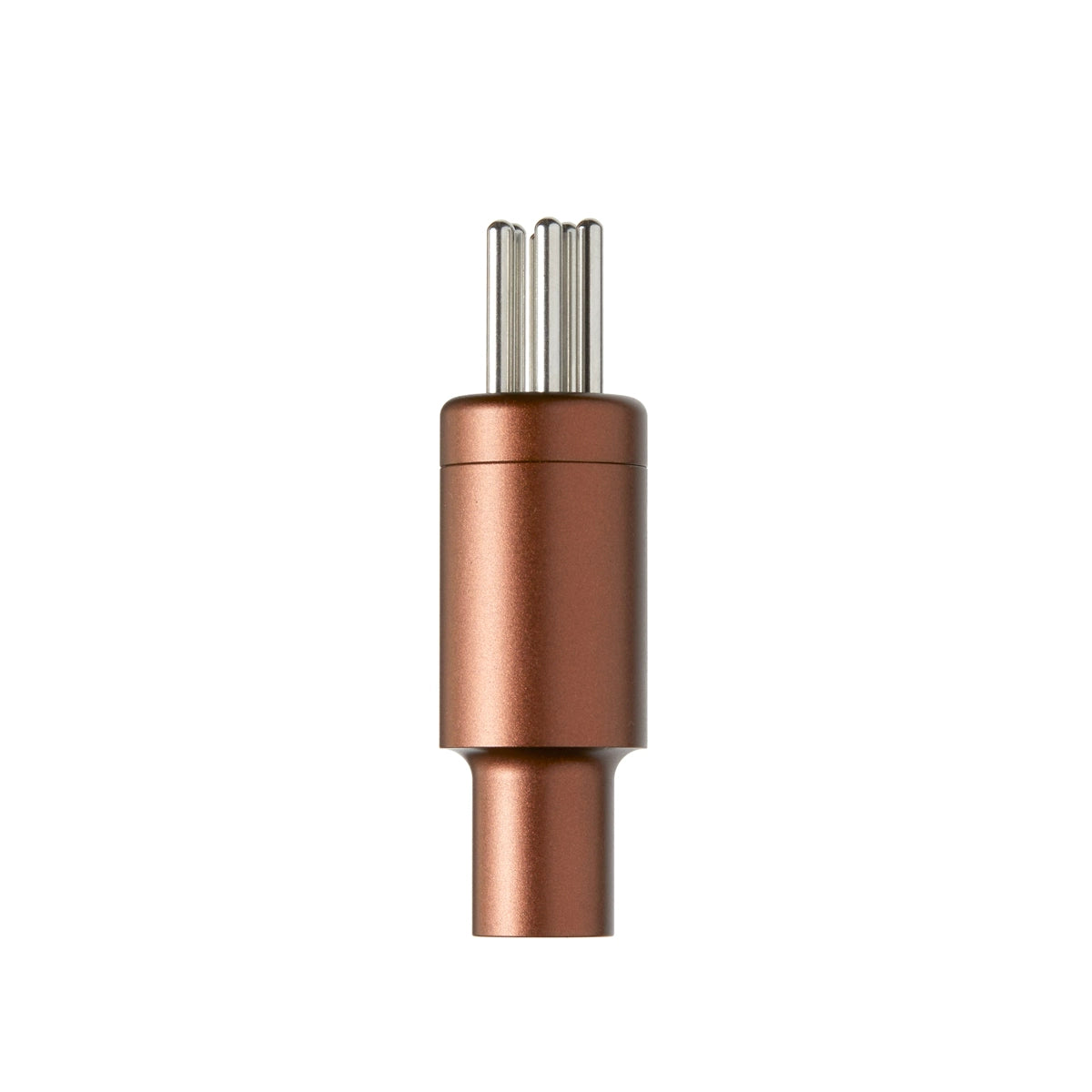
COREFIT Head Driver
Its shape allows you to work more broadly around the jaw, skull and certain areas of tension.
The principle remains the same: favor gradual, comfortable pressure rather than overly intense work.
The Scalp
When the upper face lacks mobility
It's easy to forget that the scalp is part of the same tissue network as the face.
Simply place your hands on your scalp and gently try to move the skin: some areas may be very mobile, while others may feel more fixed.
A particularly tense scalp can contribute to an overall sensation of reduced tissue mobility and visually influence the balance of the face, especially around the forehead and temples.
The goal of scalp massage is therefore not simply to stimulate the scalp, but above all to gradually improve its mobility.
You can work successively on the temples, sides of the skull, crown of the head and then the back of the skull. Just a few minutes are enough to identify the areas that need more attention.
Beauty Tools to Add to Your Ritual
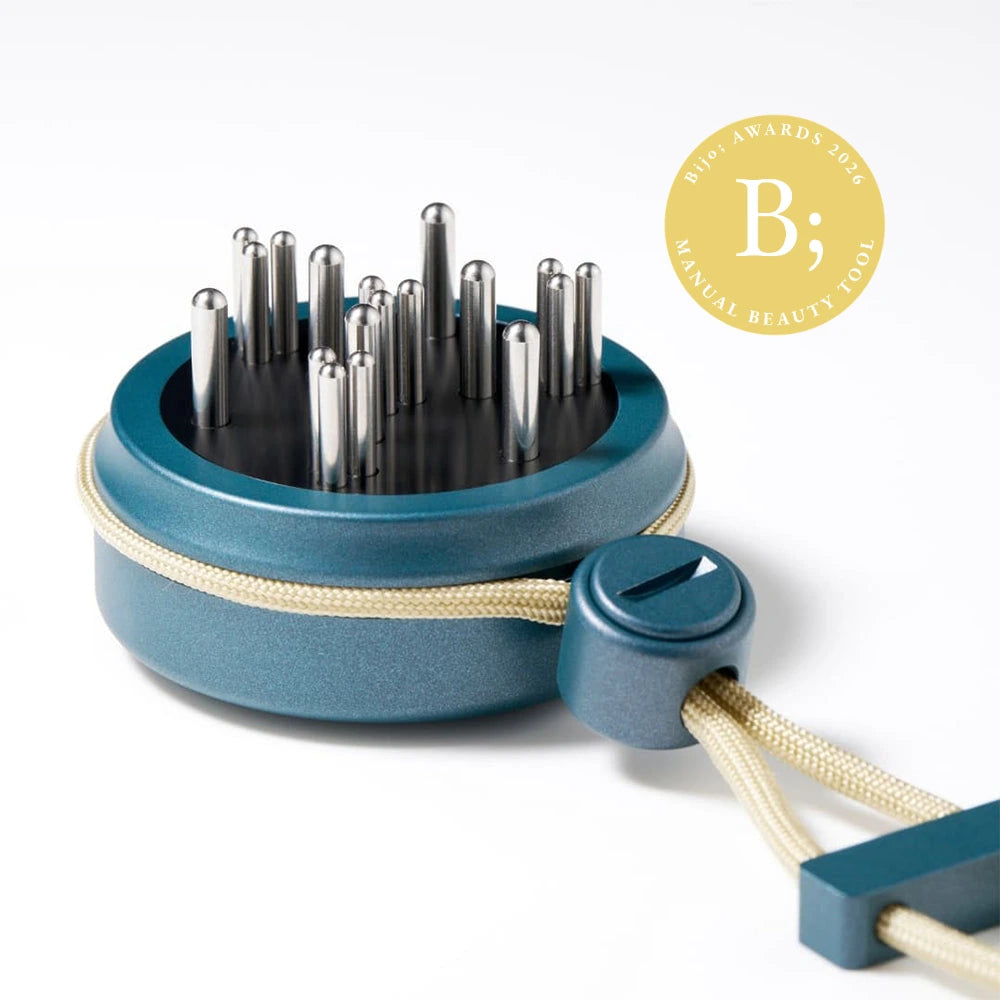
COREFIT HORiZONE
To combine scalp work with EMS technology as part of a more complete ritual.
COREFIT Head Driver
To target different areas of the skull and support mobility work.

Bijo; Scalp Brush
A brush designed to massage the scalp with gentle, progressive circular movements.
Scalp massage is particularly well suited to the evening, when the goal is both to relax the features and create a moment of transition after the day.
The Neck and Shoulders
When tension comes from lower down
The face doesn't stop at the jaw. A stiff neck, tight trapezius muscles or constantly raised shoulders can affect the overall posture of the head and neck.
When the head is positioned forward or the upper body remains particularly tense, the line between the face, neck and shoulders can appear less defined.
Visually, this can contribute to a less defined jawline or a heavier-looking area beneath the chin.
Working on the upper body therefore allows you to approach the face more holistically. Here again, the goal is not to apply maximum pressure, but to gradually encourage relaxation.
Beauty Tools to Add to Your Ritual
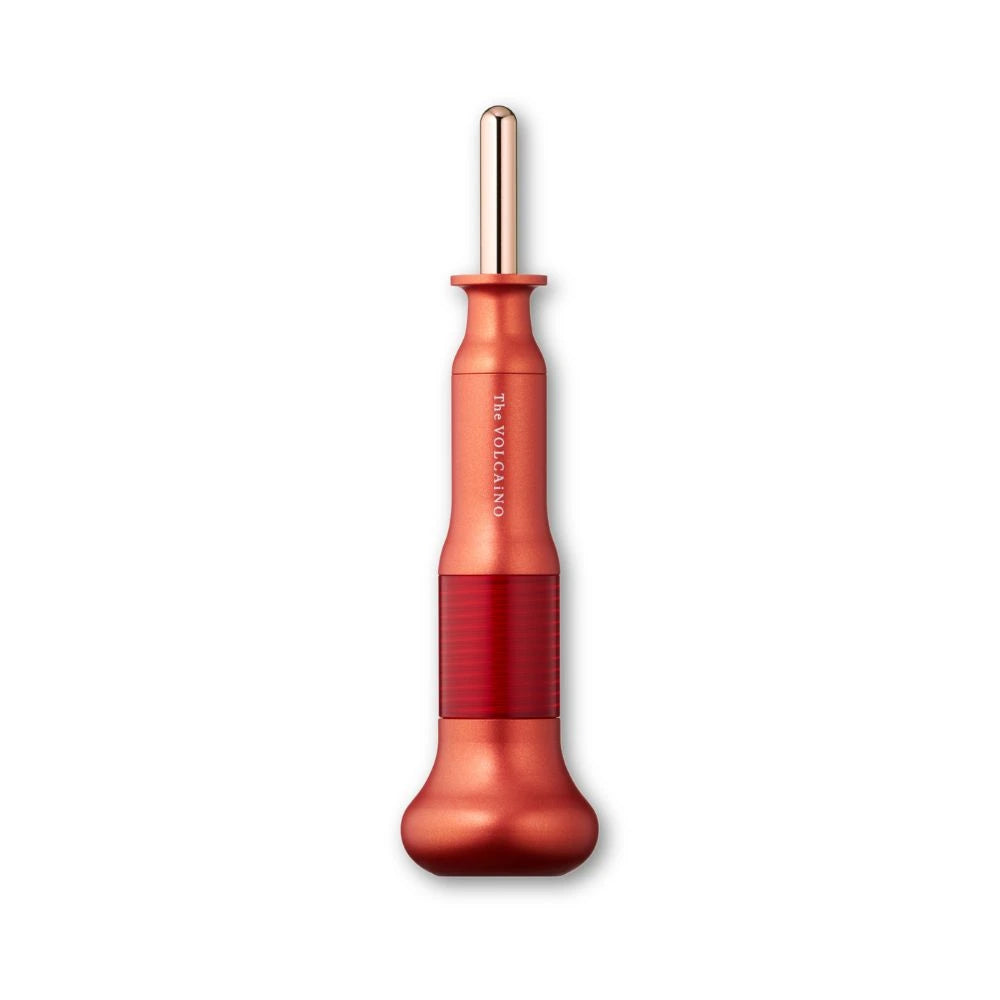
COREFIT VOLCAiNO
To use on the shoulders and upper body to support the release of particularly tense areas.
Please note: VOLCAiNO is not intended to be used directly on the neck, face or under the chin. Here, it can be used to work on the upper-body areas surrounding the neck.
Mobilizing and Encouraging Fascial Gliding
Releasing the muscles is a first step. Massage also helps work on the mobility of the tissues surrounding them.
The different fascial layers need to be able to move and glide against one another. Movement, gentle mobilization and variations in pressure help maintain this gliding capacity.
This is sometimes referred to as “fascial lubrication”: it does not mean literally adding a lubricant to the fascia, but rather using movement and massage to create an environment in which the tissues can maintain their mobility.
Slow movements, gradual pressure and, above all, rolling and gliding motions allow you to work across broader areas of tissue before moving on to more targeted techniques.
Beauty Tools to Add to Your Ritual

EKATO Body Meditation Roller
Designed to work across the body with broad rolling movements, particularly on the shoulders, arms and upper body.

SLIM CERA Plus+
With its smaller format and rolling motion, it allows you to continue this gliding work on more precise areas, particularly the face.
With rollers, the goal is not to pull strongly on the skin or seek maximum pressure, but to maintain a fluid, consistent and comfortable movement.
The Relax Ritual: From Large Muscles to Smaller Ones
To build a consistent ritual, you can follow a simple approach: start with the larger muscle groups and gradually move closer to the face.
Start with the shoulders and upper body
The trapezius muscles, shoulders and upper back are large muscle groups where tension can easily build up.
Start by releasing this foundation, particularly with the VOLCAiNO or the EKATO Body Meditation Roller, before gradually moving upward.
Move up toward the neck and scalp
Continue with the back of the skull, the neck and then the scalp.
The Head Driver, Bijo; Scalp Brush or HORiZONE can be used to gradually work on these areas and support scalp mobility.
Finish with the jaw and smaller facial muscles
Once the larger areas have been worked on, you can focus more precisely on the jaw, cheeks and different points of the face.
The Face-Pointer II can then be used to target smaller areas with greater precision.
This progression follows a simple idea: first relax the larger muscle structures before gradually moving closer to the face. A few minutes may be enough. Pressure should always remain comfortable: a particularly sensitive area does not necessarily require more force, but often more gentleness and consistency.
Relax Before Lifting
Facial work doesn't necessarily have to start with a lifting motion.
Releasing the shoulders and neck, mobilizing the scalp, then working on the masseter and facial muscles allows you to approach the whole area more holistically.
Before trying to lift the features, start by releasing what is keeping them under tension.
A simple principle that turns a few minutes with Beauty Tools into a true evening ritual.
Take It Further
Also discover the video by Sylvie Lefranc, a face yoga expert, to better understand the role of muscle tension and learn how to incorporate these techniques into your routine.
Safety Precautions
The massages and Beauty Tools presented in this article are intended for wellness and beauty purposes. They are not intended to diagnose, treat or prevent any medical condition.
Always follow the instructions and contraindications specific to each device and avoid use on any area that is painful, inflamed, injured or showing any abnormality.
Stop using the product in case of pain, unusual discomfort or a persistent reaction.
In case of significant bruxism, jaw pain, temporomandibular joint disorders, cervical problems, muscular or neurological conditions, recent surgery or any other specific medical situation, seek advice from your doctor or a healthcare professional before using a Beauty Tool or performing targeted massage.
Effects and sensations may vary from person to person. The information provided here is intended for educational and aesthetic purposes and does not replace medical advice.