What is fascia?
Fascia is a living connective tissue that extends throughout the entire body, forming a vast three-dimensional network.
Made up of collagen (strength), elastin (flexibility), and a water- and hyaluronic-acid-rich ground substance (lubrication), it surrounds, connects, and supports all of our internal structures.
It is often described as a second inner skin, a hydrated spiderweb-like structure that connects every organ, muscle, and cell.
“To picture it, imagine an orange: the flesh represents the muscle, and the thin white membrane separating the peel from the flesh is the fascia.”
— Sylvie Lefranc, fascialist and facial beauty expert
The three main types of fascia
-
Superficial fascia
Located beneath the skin, rich in water, fat cells, and nerves.
→ Cushions, allows skin mobility, and transmits sensations (touch, pain, temperature). -
Deep fascia
Surrounds muscles, tendons, bones, nerves, and blood vessels.
→ Transmits muscular forces, maintains posture, and coordinates movement. -
Visceral fascia
Supports internal organs (lungs, heart, liver, intestines).
→ Allows them to glide and contributes to breathing, digestion, and circulation.
“The lymph and vital energy also circulate through the fascia: lymphatic channels and acupuncture meridians pass through it. When we stimulate the fascia, we stimulate circulation and vitality.”
— Sylvie Lefranc
Essential functions of fascia
Long considered merely a “packaging” tissue, fascia is now recognized as a sensory and mechanical organ in its own right.
It provides:
- Support and structure: distributing loads and absorbing impacts.
- Force transmission: relaying muscular movements.
- Proprioception: informing the brain about the body's position.
- Sensitivity: being highly innervated, it plays a role in chronic pain.
- Hydration: acting like a sponge by distributing water and nutrients.
- Functional continuity: connecting all structures through myofascial chains.
Surgeon Jean-Claude Guimberteau, a pioneer of fascial research in France, filmed living fascia beneath the skin: a moving, intelligent, and vibrant network, far from the “inert” tissue it was once thought to be.
Fascia ⎪ “Walks Under the Skin” by Dr. Jean-Claude Guimberteau

When fascia suffers
Causes
- Scars, injuries, and inflammation
- Lack of movement or a sedentary lifestyle
- Chronic stress
- Dehydration
- Hormonal decline (menopause, reduced estrogen levels)
Consequences
- Adhesions: “stuck” or rigid areas
- Diffuse pain and stiffness
- Chronic fatigue
- Collapsed posture
- Loss of tone and circulation
“Fascia can become stuck in certain areas and overstretched in others. It then loses its natural ability to glide. This is what creates stiffness or the feeling that ‘nothing is flowing anymore.’”
— Sylvie Lefranc
How to take care of your fascia
Fascia is adaptable: it regenerates when it is properly hydrated, mobilized, and relaxed.
- Move regularly: yoga, pilates, dance… Fascia thrives on fluid movement.
- Stay hydrated to nourish the matrix rich in hyaluronic acid.
- Breathe deeply to mobilize the visceral fascia.
- Reduce stress, which contracts fascia through the autonomic nervous system.
- Practice regular self-massage with suitable beauty tools.
“Anything that rolls helps re-lubricate the fascia. Making it glide again is giving it back life, radiance, and flexibility.”
— Sylvie Lefranc
Fascia and facial beauty
Beneath the skin, facial fascia connects muscles, bones, and dermis. Its condition directly influences facial tone, flexibility, and expression.
- Flexible and hydrated fascia → better circulation, radiant skin, relaxed features.
- Rigid or stuck fascia → fluid stagnation, more visible wrinkles, tightened features.
Facial massages and Japanese beauty tools work deeply to:
- Release adhesions.
- Restart microcirculation.
- Stimulate collagen production.
- Restore flexibility and definition to tissues.
“When the fascia around the mouth becomes rigid, the smile becomes smaller. By releasing it, we regain the face’s natural range of movement and vitality.”
— Sylvie LefrancSylvie Lefranc’s recommended tools
Some beauty tools allow targeted work on fascia, depending on whether the goal is to release deep tension or encourage mobility.
Fascia relaxation
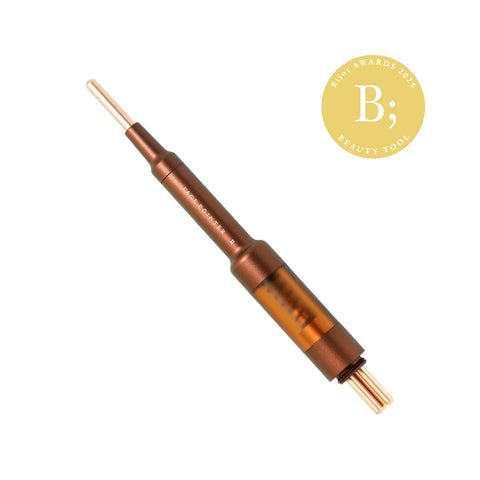
Face Pointer II
COREFIT Releases deep adhesions around the occiput, jaw, temples, and collarbones.

Body Driver
COREFIT Ideal for releasing scapular insertions, trapezius muscles, and upper back tension.
Fascia lubrication
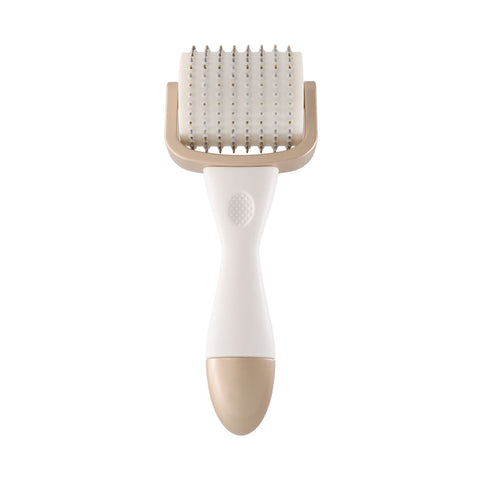
Body Meditation Roller
EKATO. Stimulates deep tissues and promotes fascia mobility around the neck and scalp.
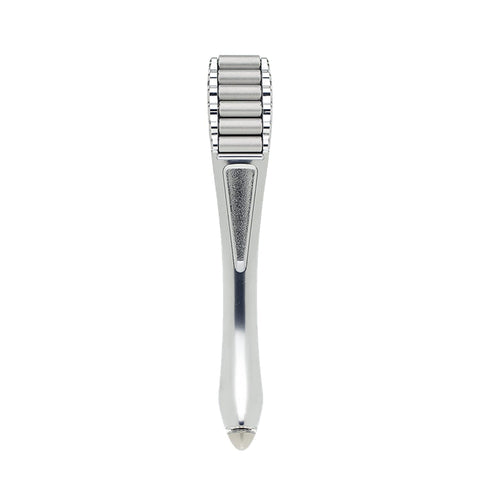
Slim Cera Plus+
HOMARE Its rotating movement helps re-lubricate fascia and improve tissue circulation.
“Fascia forms a continuous network throughout the body — with no beginning or end — and releasing a distant area, such as the shoulder blade, can have a visible effect on another area, such as the eyelid.”
— Sylvie Lefranc
Facial ritual “Fascia Release” (4 minutes)
A few minutes are enough to restore tissue mobility and promote better circulation. This ritual can be incorporated into your daily routine, morning or evening.
- Breathe deeply and release your shoulders.
- Face Pointer II: work on the main attachment points (occiput, jaw, under the facial contour, and temples).
- Slim Cera Plus+ or Body Meditation Roller: slowly roll the tool from the center towards the outer areas of the face to encourage fascia mobility.
- Face Tape: apply a strip over the targeted wrinkle to gently lift the epidermis and allow the fascia to rehydrate overnight.
“After a night wearing tape, the wrinkle temporarily fades: the released fascia regains its original shape.”
— Sylvie Lefranc
Face Tape
BIJO; A kinesiology tape specially designed to support the face’s natural lifting process during rest and complement fascia release work.